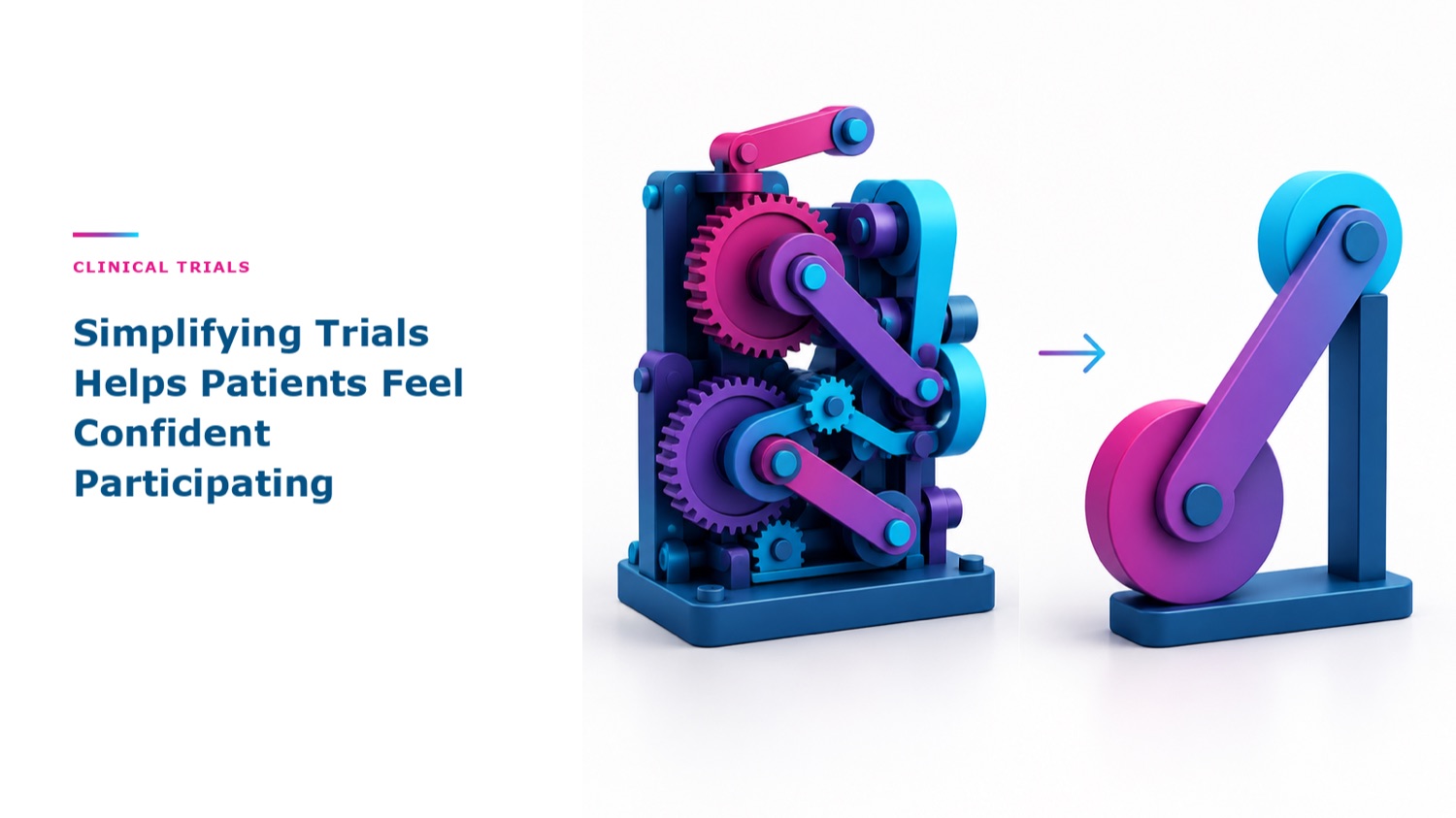
Ask someone who has just signed a consent form what the study involves and the answer is often a guess. Medical jargon, complex protocols, and the sheer volume of information create barriers of their own, and for many people that is enough to stop them. Simplifying the language of a clinical trial does not lower the standard of information. It raises the chance that the person actually understood it, and that is what confidence is built on.
People are more likely to trust the process when they can clearly understand the purpose, benefits, and requirements of a trial. Simplify clinical trials by using plain language and breaking complex terms into relatable concepts. The result is visible: more questions asked at the first visit, fewer surprises later, and more people from more backgrounds able to take part.
Clear Language Builds Patient Confidence
Imagine being handed a 20-page document filled with unfamiliar terms and legalistic phrasing. This is what many people face when considering a clinical trial. For some, it is enough to stop them from participating altogether. Simplifying the language makes the process approachable. Consider other ways to share this information so the person has not just received it but, more importantly, understood it.
People who feel understood are more likely to ask questions and share their concerns. This open dialogue builds trust, a vital ingredient in the patient-researcher relationship. Simple language makes it easier to answer key questions like: “What does this mean for my health?” or “Will this trial improve my quality of life?” When people know what to expect, they feel more confident about their decision, whichever way it goes.
Increased Accessibility Supports Inclusion
Medical research thrives on diversity, yet barriers like unclear communication can exclude people from participating. When researchers simplify clinical trials, they make their work accessible to patients from varied backgrounds, including those with limited health literacy or non-native language skills.
This inclusivity enriches trials by allowing broader representation, ensuring the results apply to a more diverse population. It also allows people from all walks of life to feel they have a stake in medical progress.
Simplified materials can include visuals, videos, and interactive elements, all aimed at making key messages stick. Patients deserve clear, actionable information presented in formats that work best for them.
Empowering Patients Through Simplicity
Feeling lost in the process is a common fear. Clear, simplified communication lets participants focus on what truly matters: their health. It also helps people feel valued as partners in advancing science. We have understood for a long time that clear trial materials increase patient confidence and reduce dropout rates, yet we find ourselves in the same position two decades later.
Confident participants are more likely to stay in a study to the end. They become advocates for others, sharing their experiences and helping break down the uncertainty around clinical research. If researchers make it easier to understand a study and stay informed, participants become the strongest allies a trial has.
Trust Begins with Transparency
Simplifying language does not mean oversimplifying details. It means presenting complex ideas in ways people can trust and understand. Transparency builds confidence because participants know they are getting the whole picture, free from confusing or overwhelming terms.
Patients value honesty and clarity. When these qualities shine in trial communications, the decision to participate feels less risky. Explaining potential side effects or trial procedures in straightforward terms reassures participants that their well-being is the top priority.
Better Communication Drives Retention
Retaining participants is as important as recruiting them. Patients are more likely to stay committed when they understand the study’s progress, purpose, and results. Researchers who provide regular, simple updates keep participants invested and motivated.
Clear communication can take the form of newsletters, check-ins, or community events that celebrate milestones. These small efforts show participants they are not just a number. They are an integral part of something meaningful.
Simplify Clinical Trials to Strengthen the Future of Research
Simplifying trials not only benefits current participants but also lays the groundwork for research designed with patients rather than only for them. When people trust clinical trials, they become more willing to recommend participation to others. This trust grows with every interaction that is transparent, respectful, and easy to understand.
Every step toward simplicity, from streamlined consent forms to interactive educational tools, moves research closer to lasting patient confidence. Understanding earlier also costs less than confusion later: a person who knows what a study asks before the first visit is far less likely to withdraw after it.
If you want people to understand a study before they are asked to join it, see how the pathway works or see what trialport does for sponsors and CROs.
About the author
Keith Berelowitz has spent more than twenty years watching clinical trials work on paper and struggle in real life. He has helped run studies, advises sponsors and CROs on how they engage with people, and chairs a UK research ethics committee, where consent forms and participant information sheets cross his desk every month. That vantage point led to one conclusion: most trial problems are not failures of science. They are failures of understanding at the moment a person decides.
He founded trialport, a clinical trial navigation and decision-support platform, so that understanding a study comes before anyone is asked to join one. Understanding comes first. Decisions follow.