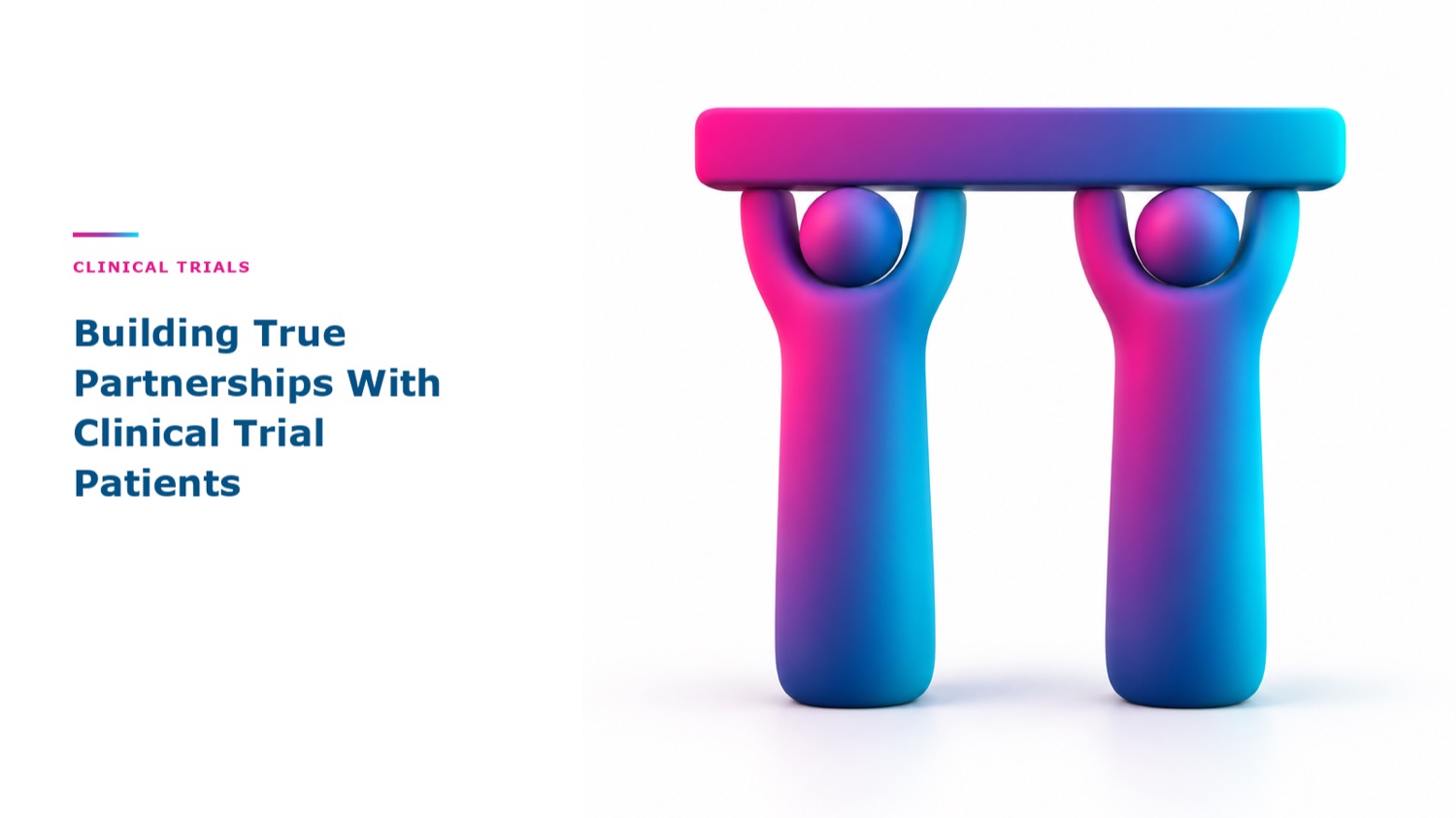
Most studies consult patients after the protocol is written, when the decisions that determine burden have already been made. Then they wonder why retention slips. Partnership means something different: bringing people with the condition into the room while a trial is still being designed, because they see what researchers alone cannot.
Fostering Patient Partnerships in Research
Engaging patients as partners begins with listening. Participants are not merely subjects. They are experts in their own experiences. Researchers should invite them to share their perspectives to help identify and address pain points that traditional trial designs often overlook. That input lays the foundation for trust. It also helps researchers understand how logistical challenges affect who joins and who stays, and how to address fears surrounding participation.
Collaboration can take many forms: patient advisory boards, focus groups, or co-design workshops. These create opportunities for open dialogue between researchers and patients, so that trials are not just scientifically sound but also workable for the people in them. There are several established models for engaging patients as partners in clinical research.
Designing Trials Around Patient Insights
Clinical trials have traditionally been designed around the needs of researchers and sponsors to fulfill objectives, thus sidelining the very individuals they aim to help. Shifting this paradigm requires embedding patient feedback into every phase of the trial lifecycle.
From protocol development to post-trial follow-ups, patient insights can reveal hurdles that impede participation. For example, studies show that people often drop out of clinical trials due to burdensome travel requirements or unclear instructions. Addressing these issues early, by integrating telemedicine visits or providing detailed, patient-friendly materials, can improve retention and overall trial success.
Making clinical trials more inclusive also means rethinking recruitment strategies. Diverse populations bring unique needs and perspectives, and working with patients helps researchers design trials that accommodate these differences.
Co-Creation as a Catalyst for Innovation
Co-creation is a practical way to bridge the gap between researchers and participants. Patients who contribute to trial design help shape protocols that are not only scientifically robust but also aligned with real-world needs. This approach helps make trials accessible and relevant, and it paves the way for faster recruitment and higher retention rates.
One notable example is the rise of hybrid trial models. These designs blend in-person and remote participation and allow greater flexibility. Researchers that consult patients during the planning phase can use that feedback to identify which elements of the trial are most burdensome and adapt accordingly.
To facilitate this partnership researchers can use collaborative tools like surveys, workshops, and patient-reported outcome platforms. These tools help researchers stay connected with patients throughout the trial process. This results in continuous feedback and improvement.
Prioritizing Communication and Transparency
Trust is the foundation of any successful partnership. It is considerably more critical in clinical trials. Transparency in communication builds this trust by helping patients understand the goals, risks, and potential benefits of the study.
Researchers can cultivate transparency by using plain language in trial materials, providing regular updates, and maintaining open lines of communication. When people clearly understand how their contributions influence outcomes, their sense of purpose grows.
Measuring Success Through Patient Engagement
The success of patient partnerships goes beyond enrollment numbers or trial completion rates. To measure success, researchers must adopt metrics that reflect participants’ own experiences and satisfaction.
For instance, tracking patient retention, patient engagement levels, and feedback can provide a clearer picture of how well a trial meets participants’ needs. These metrics also help researchers refine their approaches to ensure future studies are even more patient-focused.
When people feel their voices are heard and valued, their contributions to clinical trials grow more meaningful, and the research is better for it.
Partnership also means giving people the information to decide well before they are asked to sign anything. See what trialport does for sponsors and CROs
About the author
Keith Berelowitz has spent more than twenty years watching clinical trials work on paper and struggle in real life. He has helped run studies, advises sponsors and CROs on how they engage with people, and chairs a UK research ethics committee, where consent forms and participant information sheets cross his desk every month. That vantage point led to one conclusion: most trial problems are not failures of science. They are failures of understanding at the moment a person decides.
He founded trialport, a clinical trial navigation and decision-support platform, so that understanding a study comes before anyone is asked to join one. Understanding comes first. Decisions follow.